Pizza becomes a practical weeknight dinner when you choose the base, sauce, and toppings for speed rather than complexity. You can use store-bought dough, a flatbread, or leftovers and still serve a homemade meal that fits a busy American evening.
One family member can choose a familiar cheese combination while another adds vegetables or a spicy finish. You will find classic choices, creative ideas, and flexible ways to use what is already in your refrigerator. The instructions use American kitchen equipment and Fahrenheit temperatures, so you can move from planning to baking without translating the details.
The crust is the baked foundation that supports the sauce, cheese, and toppings. Once you know how much time you have, you can choose a crust that matches the evening instead of forcing every dinner into the same format. A simple planning formula helps you decide what to make before you shop or start cooking: choose one base, one sauce, one main cheese, and one or two toppings.
Key Takeaways
- Choose the base according to the time available.
- Use a thin, even layer of pizza sauce.
- Limit toppings to prevent a soggy center.
- Cook raw meat before placing it on the crust.
- Divide one bake into zones for different preferences.
- Cool and refrigerate extra slices promptly.
A Simple Formula for Fast Family Pizza Nights
Turn refrigerated dough, jarred sauce, shredded mozzarella, and leftover vegetables into a quick pizza dinner by assembling those four ingredients and baking them on a preheated surface. The formula gives you a balanced family meal without requiring a separate homemade meal for every person.
Start with one base, one sauce, one main cheese, and two toppings. The base supplies structure, the sauce adds moisture and flavor, the cheese binds the toppings, and the toppings provide contrast. A vegetable or a side salad keeps the meal from becoming only bread, cheese, and meat.
Five planning checks can settle most weeknight decisions before the oven heats.
- Check the time available, including any dough-resting time.
- Choose a base that matches the schedule.
- Use one sauce rather than layering several wet flavors.
- Limit wet toppings so steam does not soften the crust.
- Add a vegetable or salad for freshness and balance.
Too many toppings slow cooking because the center must heat through before the crust can finish. Juicy vegetables, extra sauce, and several kinds of cheese can also trap steam and create a soggy crust. A very thin flatbread is the exception: it may need fewer toppings than a thick dough base because it browns quickly and has less structure to carry moisture.
Simple does not mean plain. You can change the sauce, cheese, or finishing garnish while keeping the same four-part plan. A weeknight meal plan becomes easier when each ingredient has one clear job and the shopping list stays short.
The base is the next decision because the crust determines cooking time and how much topping the meal can carry.
Choose a Base That Matches Your Schedule
Refrigerated dough gives you a traditional result with moderate preparation, while naan makes the fastest individual meal. Both can work well, but they need different topping loads and baking times.
Let dough rest according to its package or recipe instructions so it stretches instead of springing back. Overloading a thin base is the mistake most likely to produce a soft center. A par-baked or toasted base is useful when dinner must be ready in under 20 minutes.
| Base | Prep | Texture | Topping load | Best weeknight use |
|---|---|---|---|---|
| Refrigerated dough | Rest and stretch for 20–60 minutes | Chewy edge with a tender center | Moderate to heavy | Traditional family round |
| Fresh bakery dough | Rest and shape according to bakery guidance | Airy, elastic, and browned | Moderate | Better-textured dinner when time allows |
| Naan | Unwrap and assemble immediately | Soft, sturdy, and lightly crisp | Light to moderate | Fast individual naan pizza |
| Pita | Open or use whole; no rise needed | Thin with a firm, crisp edge | Light | Quick lunches or small portions |
| English muffins | Split and toast lightly | Crunchy, nubby, and compact | Light | Child-size snacks or breakfast pizza |
Store-bought dough and refrigerated dough
Store-bought dough removes measuring and kneading from the evening, while refrigerated dough often gives you a thicker edge than a ready-made flatbread. Bring the dough to the temperature and resting time listed on its package; forcing cold dough into a shape can make it contract and leave an uneven crust.
Flatbreads, naan, and English muffins
Naan, pita, and English muffins are ready-made pizza bases with little preparation. Naan carries a moderate amount of cheese and cooked toppings, pita works best with a thin layer, and English muffins need small pieces so the ridged surface does not burn before the cheese melts. Thin breads especially need restrained sauce.
Choose the base first, then adjust the sauce amount to match it. Sauce control matters just as much as the base, especially on thin breads.
Sauces and Cheese That Keep Dinner Easy
Excess sauce and wet cheese can make even a well-prepared crust soft. Use a thin, even layer of sauce and keep the cheese amount proportional to the base.
Fast sauce choices
Jarred pizza sauce is the fastest tomato option and usually needs no cooking. Marinara adds a looser, herb-forward flavor, so spread it lightly. Pesto brings basil and oil, olive oil with garlic creates a simple white base, and ricotta can be dotted over the crust for a mild, creamy finish.
Spread sauce nearly to the edge but leave a narrow border for browning. White-sauce or oil-based pizzas lack tomato acidity, so pair them with a vegetable or protein carrying strong seasoning. That contrast keeps the finished bite from tasting flat.
Cheese combinations that melt well
Shredded low-moisture mozzarella is the most dependable melting choice. Fresh mozzarella tastes milky and soft but should be drained or patted dry first. Cheddar brings sharper flavor, provolone adds a smooth savory note, Parmesan supplies salty browning, and ricotta creates creamy pockets rather than a stretchy blanket.
- Mozzarella plus Parmesan: stretchy with a browned, salty finish.
- Mozzarella plus provolone: mild, smooth, and savory.
- Cheddar plus mozzarella: sharp flavor with reliable melt.
- Ricotta plus mozzarella: creamy pockets with a stretchy surface.
- Pesto plus mozzarella: basil flavor with a balanced cheese melt.
Drain fresh mozzarella before baking; excess water is a direct route to a soft center. Keep cheese in an even layer so small bases do not develop heavy wet spots. Fresh flavor works best when moisture stays controlled.
These sauce and cheese choices make dependable combinations possible, from a simple cheese pizza to familiar toppings that everyone at the table can recognize.
Classic Combinations Everyone at the Table Can Share
One sheet pan can serve a mixed family when you divide the crust into two or three topping zones. Keep one zone as cheese pizza, give another pepperoni or sausage, and reserve a smaller area for vegetables or a stronger sauce.
Cut toppings into small, even pieces so every slice cooks consistently. Raw sausage must be fully cooked before it goes on the crust; fully cooked sausage can be sliced and added directly. Do not pair several salty meats with a heavily salted sauce or cheese.
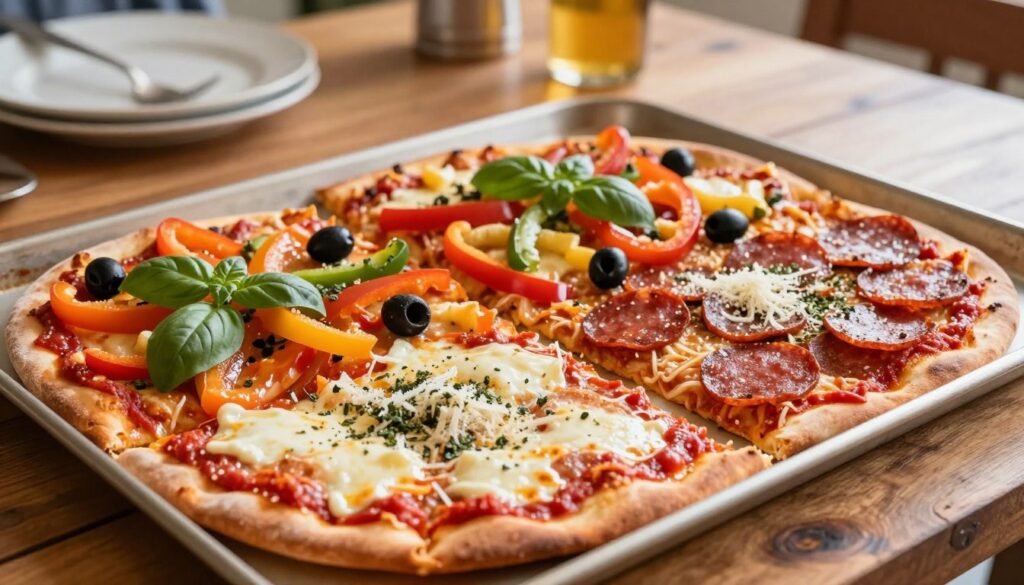
These five combinations cover familiar tastes without requiring separate dinners:
- Cheese and herb: use pizza sauce, mozzarella, and fresh basil or dried Italian herbs after baking.
- Pepperoni and mushroom: combine pepperoni with thinly sliced mushrooms for a savory, recognizable pie.
- Sausage and bell pepper: use cooked sausage and small pieces of sweet bell pepper.
- Ham and pineapple: balance salty ham with drained pineapple in small pieces.
- Chicken with barbecue sauce and red onion: use cooked chicken, a thin layer of barbecue sauce, and finely sliced onion.
Strong flavors do not have to take over the whole bake. Place jalapeños, pineapple, barbecue sauce, or extra onion on one half so cautious eaters can choose a familiar slice. The same approach works when adults want heat and children want a plain cheese zone.
For more classic inspiration, mozzarella and basil pizza combinations show how a short ingredient list can still deliver a clear flavor. Pepperoni adds a spicy note, while mushrooms, olives, and vegetables offer lighter directions.
Familiar ingredients make the first shared dinner easier. Once those combinations are covered, the same ingredients can become more playful without requiring unfamiliar cooking techniques.
Creative Pizza Ideas for Kids and Adults
Turn one container of leftover chicken into a different dinner by switching from tomato sauce to pesto and from mozzarella to a cheese with a sharper finish. A new sauce and cheese can make yesterday’s food feel planned rather than repeated.
Cook raw meat before it reaches the crust, and cook raw mushrooms and broccoli first so they soften and release less water during baking. Delicate greens and fresh herbs are often better added after baking. Watery vegetables such as zucchini and fresh tomatoes should be salted or drained before use.
Vegetable-forward combinations
Try roasted squash with goat cheese, spinach with ricotta, broccoli with cheddar, or corn with jalapeño. Roast squash and broccoli first; wilt spinach briefly if it is particularly wet. Add corn in small amounts and keep jalapeño on one portion when younger eaters prefer less heat.
Leftover-inspired combinations
Use leftover chicken with pesto, taco-seasoned ground beef with cheddar and tomato, or roasted vegetables with feta. The ground beef must already be fully cooked, and fresh tomato should be drained or used sparingly. Feta browns less than mozzarella, so combine it with a melting cheese when you want a softer surface.
Breakfast and snack-style combinations
Top a toasted base with cooked egg and bacon, pair apple with cheddar, or bake hummus with roasted vegetables added after baking. Add the hummus once the crust is hot so its texture stays creamy. Bacon should be cooked first, and apple slices should be thin enough to soften before the crust darkens.
Playful combinations work best when one ingredient remains familiar. Changing the sauce or finishing garnish can turn a standard bake into a new meal, but the bottom still needs the right heat so it cooks before the toppings overbrown.
Bake Each Style at the Right Heat
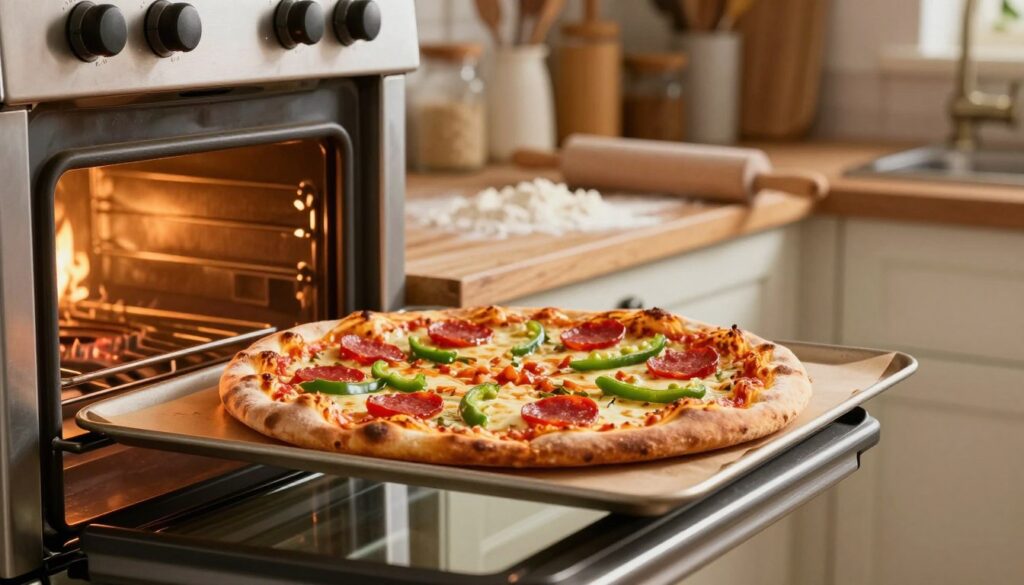
A fully preheated oven matters more than adding extra minutes to an oven that started cold. High heat sets the crust quickly, melts the cheese, and reduces the time wet toppings have to release steam.
Follow package directions when they differ from these general ranges. Place a pan or stone in the oven while it heats if you want a crisper bottom, and use parchment only when the base or pan instructions support it.
| Style | Temperature range | Approximate time | Rack position | Doneness cue |
|---|---|---|---|---|
| Thin flatbread | 400–450°F | 8–12 minutes | Middle rack | Edges crisp and cheese melted |
| Standard round dough | 450–500°F | 10–16 minutes | Lower-middle rack | Bottom browned and edge puffed |
| Sheet-pan dough | 425–475°F | 15–25 minutes | Lower rack | Center set and underside golden |
| English muffin or naan | 400–450°F | 8–12 minutes | Middle rack | Cheese bubbling and base crisp |
Preheat fully before baking; a cold baking sheet and a wet topping load are common reasons for a soft crust. If the bottom is pale, move the bake to a lower rack or use a preheated surface. If the cheese burns, lower the rack only when the top is finishing too quickly, or reduce the temperature slightly while following the base instructions.
- Pale bottom: use a hotter preheated surface or a lower rack.
- Burnt cheese: reduce top exposure and check the bake earlier.
- Soggy center: reduce sauce and wet toppings next time.
- Uneven browning: rotate the pan once if the oven heats unevenly.
High heat should cook the bottom before the topping dries out. Portioning and assembly now matter because serving format can make the same bake easier for a mixed-age family.
Make Assembly Easy for a Mixed-Preference Family
Divide one dough into several personal bases when one child wants only cheese and adults want vegetables or heat. Individual pizzas, one large divided pizza, and a build-your-own pizza bar let you serve different tastes without cooking several separate dinners.
Leave a small border around every crust and place wetter ingredients sparingly. Children should not add unlimited sauce or cheese before baking, because the extra moisture can leave the middle undercooked.
Use one of these three formats:
- One large divided pizza: mark zones for plain cheese, vegetables, and spicy ingredients.
- Individual mini bases: give each person a small crust and monitor browning closely.
- Build-your-own pizza bar: set out measured ingredients so everyone assembles one controlled portion.
A six-part assembly system keeps the counter organized:
- Set out the bases.
- Offer two sauces.
- Choose two cheeses.
- Prepare cooked toppings.
- Add vegetables.
- Label spicy ingredients.
Individual bases are useful for allergies or strong preferences, but small crusts brown quickly and need closer monitoring. Keep sauce in small bowls, use spoons rather than open jars, and place cheese in measured portions. Serve a simple salad, sliced fruit, or raw vegetables alongside the meal, not as toppings.
Personal portions can reduce negotiation at the table. Planning those portions also determines how well extra slices can be cooled, packed, and reheated.
Store and Reheat Leftovers Without Losing Texture
The oven or skillet generally preserves crust texture better than the microwave, while the microwave wins for speed. Refrigerate cooked slices within 2 hours, or within 1 hour when the surrounding temperature is above 90°F.
Store leftovers in a shallow airtight container or wrap slices individually. Refrigerated pizza keeps for 3–4 days and should be reheated until hot throughout. Discard moldy or questionable leftovers rather than salvaging them.
- Oven: gives the most even heat and a crisp surface; use it when texture matters more than speed.
- Skillet: crisps the bottom while a lid melts the cheese; use medium-low heat to avoid scorching.
- Air fryer: reheats quickly with a crisp edge; check thin slices early.
- Microwave: finishes fastest but can soften the crust; use short intervals to prevent overheating.
Leftovers can become a planned second meal instead of a forgotten container. Try these four transformations:
- Serve a slice-and-salad plate with fresh greens on the side.
- Chop the toppings for a scrambled egg or omelet filling.
- Use a reheated slice as toasted sandwich filling with extra vegetables.
- Reheat flatbread and add fresh greens after baking.
Cool slices in a single layer before packing so trapped steam does not soften the bottom. If a slice develops mold, an off smell, or an unusual texture, throw it away even if the affected area looks small. Texture improves when you reheat only the amount you plan to eat.
Choose one base and one topping plan for tonight instead of trying to organize a perfect menu. A small decision now is enough to put dinner in the oven.
Start Tonight With One Easy Combination
Make the simplest version first rather than waiting for a special shopping trip: use naan, a thin layer of marinara, mozzarella, and pepperoni or mushrooms with a side salad.
Check the refrigerator, choose no more than two toppings, and preheat the oven before assembling. Divided toppings or individual bases can accommodate different preferences without adding another dinner to your schedule.
Limit moisture and topping quantity for better texture, then use familiar ingredients as the foundation for experimentation.